

Implementing National Pregnancy Pathway for High-risk Diabetic Eye Care

NEC Care Ireland, in partnership with the Diabetic RetinaScreen team, developed a National Pregnancy Pathway to protect the vision of expectant mothers with diabetes. In one year, 82 cases of sight-threatening retinopathy were detected early and referred for urgent treatment.
Overview
Pregnancy increases the risk of diabetic retinopathy (DR). Approximately 1 in 12 women with pre-existing diabetes develop some form of DR during pregnancy, and nearly 20% of women with DR experience progression from conception through 12 months postpartum. Early screening, structured monitoring plans and personalised treatment plans are crucial to reduce the risk of vision loss.
The Challenge
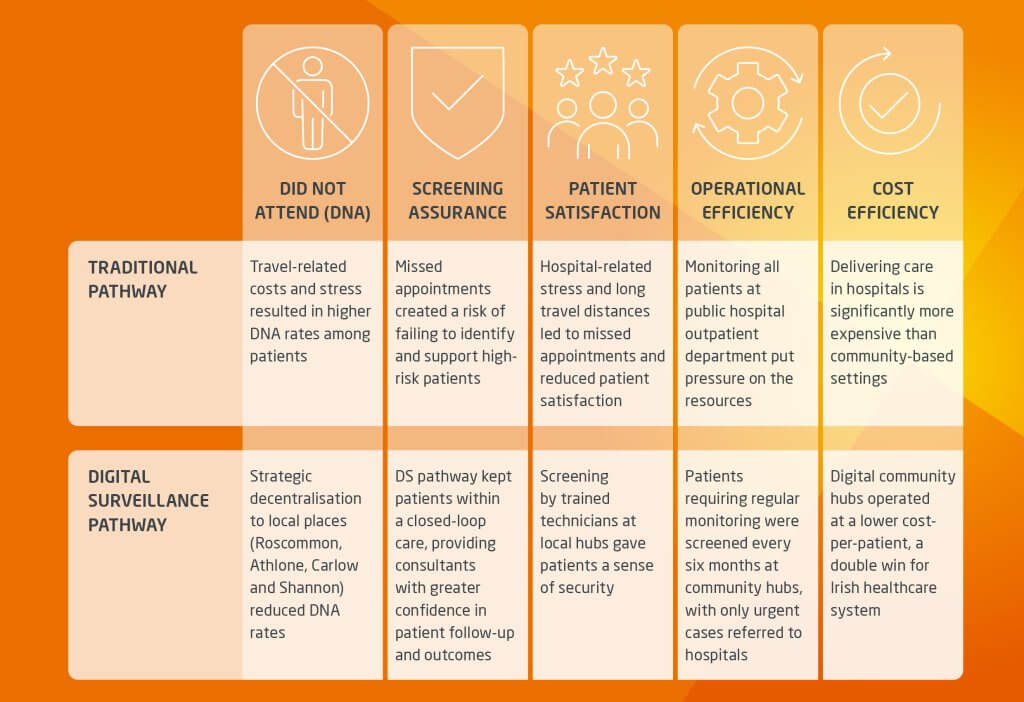
Pregnancy is a period of significantly heightened risk for the rapid progression of diabetic retinopathy. However, accessing specialised screening often require long, arduous journeys to centralised hospital clinics—a major barrier for rural patients and those managing complex pregnancies. The Diabetic RetinaScreen team recognised that pregnancy-related vision loss risk is a public health priority and requires a specialised, proactive response. The traditional care pathways were inconsistent and often reactive, leading to missed opportunities for early intervention.
Objectives
The National Pregnancy Pathway was developed with key objectives:
- Provide structured, high-frequency screening intervals to detect and treat rapid retinopathy progression before it reaches a sight-threatening stage.
- Ensure rural patients have the same access to local community-based screening as those in urban centres.
- Provide patients with a transparent, structured “Screening Roadmap,” replacing ad-hoc scheduling with a defined frequency of review to reduce patient anxiety and improve health literacy.
- Reduce “Did Not Attend” (DNA) rates among pregnant patients due to travel or logistical reasons
- Improve efficiency in managing pregnant patients by multidisciplinary and technological integrations.
- Address specific stresses faced by pregnant patients to increase uptake.
The Solution
The implementation of the pregnancy pathway focused on identifying the barriers/problems faced by pregnant patients and addressing them to improve screening uptake.
The Impact
- Care closer to home: In the first 12 months, 947 pregnant patients were screened locally, with monthly volumes increasing from 65 in April 2025 to 98 by March 2026, reducing the need for travel to centralised hospital clinics.
- A structured pathway, not ad hoc care: The programme delivered 651 scheduled pathway screenings, including 115 at 24 weeks, 334 at 34 weeks, and 202 postnatal follow-ups, ensuring patients were monitored consistently at every critical stage.
- Continuity beyond pregnancy: After completing the pathway, 199 mothers were seamlessly transitioned back into routine annual screening, maintaining long-term oversight of their eye health.
- Earlier identification of high-risk patients: Integration with OptoMize enabled automated identification and flagging of high-risk pregnancies, triggering timely follow-ups and reducing reliance on manual tracking.
- Faster access to specialist care: 82 patients (9% of those screened) with significant retinopathy progression were urgently referred for treatment, alongside 3 additional patients with other sight-threatening conditions.
- More intensive support for the highest-risk cases: 12 extremely high-risk pregnancies were escalated to monthly monitoring, ensuring closer clinical oversight where it mattered most.
““I had such a positive experience throughout my pregnancy journey. Living in a rural area, being able to attend appointments closer to home made such a difference and took a lot of stress out of things for me. The regular check-ins were incredibly reassuring and helped me feel supported every step of the way. I always felt listened to, cared for, and genuinely prioritised throughout my pregnancy, and I’m so grateful for the support and kindness I received.” Patient”
Conclusion
Through this initiative, NEC and Diabetic RetinaScreen have established a scalable, high-impact model that is actively protecting the vision of expectant mothers across Ireland. By shifting from reactive care to a proactive, community-based approach, the programme demonstrates how early intervention and structured pathways can deliver measurable improvements in outcomes.
This blueprint for managing high-risk cohorts at a national level is now primed for expansion across other screening programmes—showcasing how the combination of local access, clinical excellence, and integrated digital infrastructure can drive transformative public health outcomes at scale.
 947
947
pregnant patients screened closer to home
 82
82
sight-threatening cases detected early
 9%
9%
of patients identified with disease progression
651
structured pathway screenings delivered
 199
199
mothers transitioned to ongoing routine care
Screening software and services
Bring together technology and expertise across the whole screening ecosystem. From NEC’s Health Screening Platform powering multiple diagnostic pathways to NEC Care’s managed services, support earlier detection and intervention through more connected screening programmes.