

Decompressing Hospital Waitlists with Community Eye Care Solutions
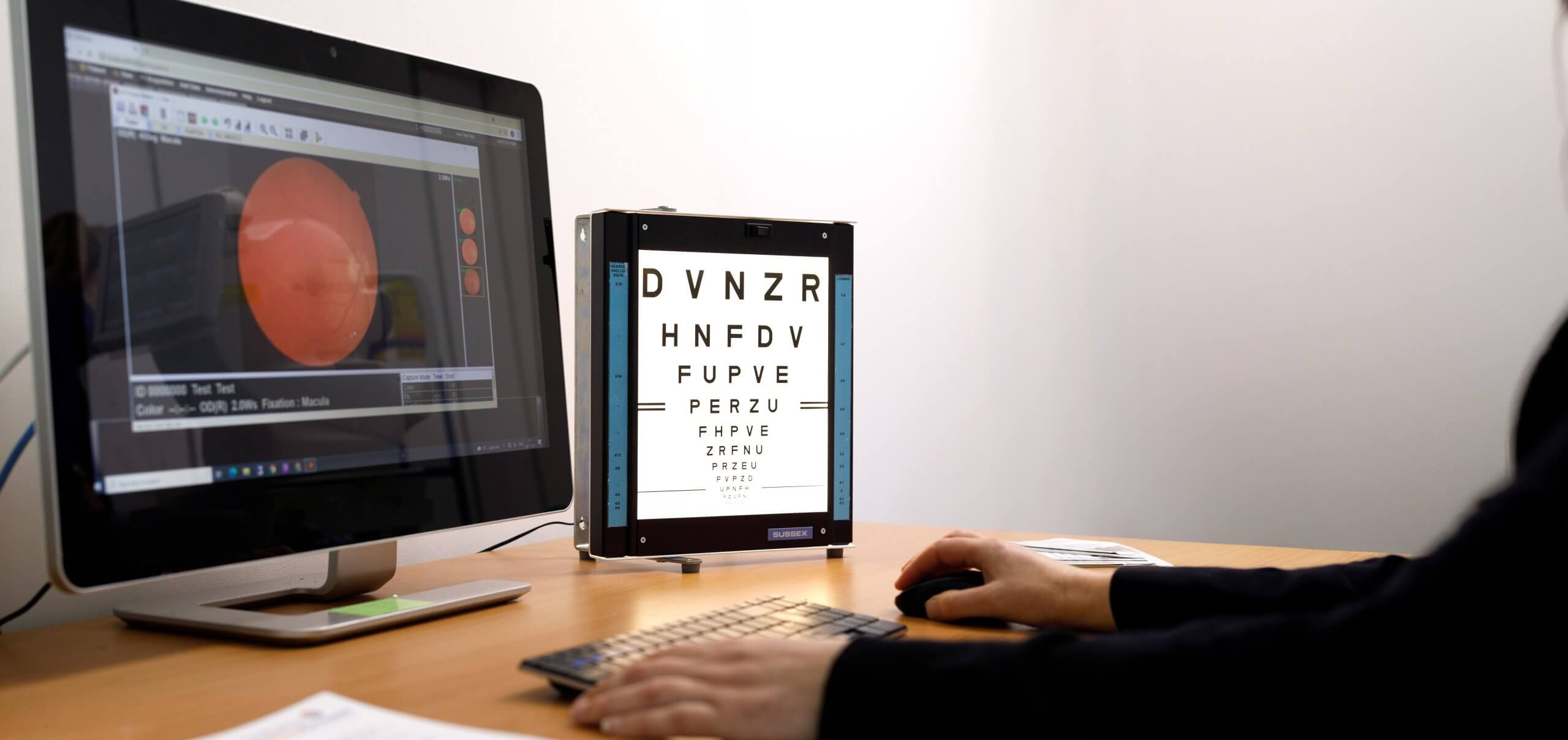
NEC Care Ireland and Diabetic RetinaScreen developed a community-based Digital Surveillance Pathway to monitor high-risk retinopathy patients, easing hospital pressures by scaling appointments from 11,000 in 2024 to over 18,000 in 2025.
Overview
People who have diabetes are always at risk of developing diabetic retinopathy. The initial phase of disease may not show any symptoms. Hence, regular eye screening is the best way to detect retinopathy before the patient notices any changes in their sight. In Ireland, NEC Care, a part of NEC Software Solutions runs a national diabetic retina screening programme Diabetic RetinaScreen across 160 sites in all 26 counties on behalf of HSE’s National Screening Service (NSS). Under this programme anyone with diabetes aged 12 and over are sent an invite to attend an eye screening appointment.
The Challenge
Historically, patients needing regular monitoring for stable retinopathy were managed within the public hospital system, contributing to significant waiting lists pressures. Further, long travel times and high logistical burdens reduced attendance, increasing the likelihood that high-risk patients would go undetected. As a result, there was a clear need to redesign how chronic eye disease is managed in Ireland.
Objectives
The DS Pathway was implemented with a clear mandate to modernise outpatient eye care. Our core objectives included:
- Waitlist reduction: To move stable retinopathy patients out of overburdened public hospital outpatient clinics and into a streamlined community surveillance model.
- Geographic expansion: To increase service availability in 2025 by launching new clinics in key locations like Roscommon and Athlone, specifically targeting rural “blackspots.”
- Clinical precision via early intervention: To utilise OCT technology to monitor subtle retinal changes every six months, ensuring patients receive preventative care before their condition requires invasive hospital treatment.
- Improving attendance (DNA reduction): To eliminate the logistical barriers of hospital visits – such as long travel times and high costs – by providing accessible, community-based alternatives.
- Patient reassurance & continuity: To provide a high-standard, consistent monitoring cycle that reduces patient anxiety and fosters long-term engagement with the screening programme.
- Resource optimisation: To shift the burden of care from high-cost hospital environments to cost-effective digital surveillance hubs, allowing hospital resources to be reallocated to complex clinical needs.
The Solution
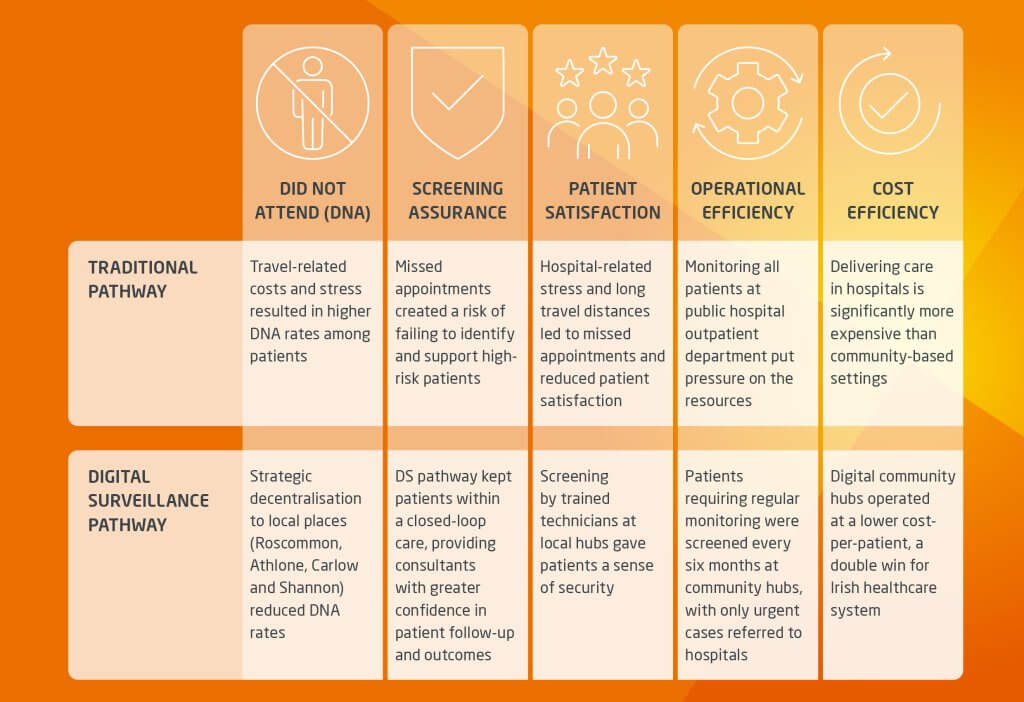
To relieve the pressures on the hospital outpatient department and reduce patient stress, the Diabetic RetinaScreen programme designed an additional pathway for DS patients who get an OCT scan and are monitored via the screening programme. It focused on addressing the barriers in the traditional pathway to enhance screening outcomes.
The Impact
The DS pathway provided a “safety net” required to keep patients out of hospitals, giving hospital consultants the confidence that these patients are being monitored to an equivalent clinical standard in the community. The key findings between May 2005 and April 2026 include:
- Expansion of screening network: over 2300 slots have been made available in more rural clinics – outside of previously used locations
- Optimised slot utilisation: over 3400 targeted outbound calls made solely to backfill available slots within the pathway
- Growth in annual appointments: number of appointments within a year increased from 11,000 to 18,000
- Enhanced screening delivery: ~ 17,000 patients were managed through Digital Surveillance pathway freeing up public hospital waitlists
Conclusion
The Digital Surveillance pathway targeted a specific cohort of patients with background retinopathy and maculopathy and those with stable retinopathy. These patients needed regular screening to ensure any changes in the vision are identified and managed at early stage. The pathway addressed key barriers experienced by both patients and outpatient department staff, helping to reduce non-attendance rates (DNAs) and improve screening uptake.
Through this initiative, Diabetic RetinaScreen has proven that by integrating technology with community access, we can solve acute system pressures while delivering superior, empathetic outpatient care.
 18000
18000
Number of appointments within a year
 16799
16799
Patients monitored through DS Pathway
 1579
1579
Urgent patients referred to treatment centres
 2300
2300
Slots made available in more rural clinics
Screening software and services
Bring together technology and expertise across the whole screening ecosystem. From NEC’s Health Screening Platform powering multiple diagnostic pathways to NEC Care’s managed services, support earlier detection and intervention through more connected screening programmes.
Get in touch
If you would like to discuss how we could support your organisation, speak to the NEC Health team today.